← All Projects
Galassia-5
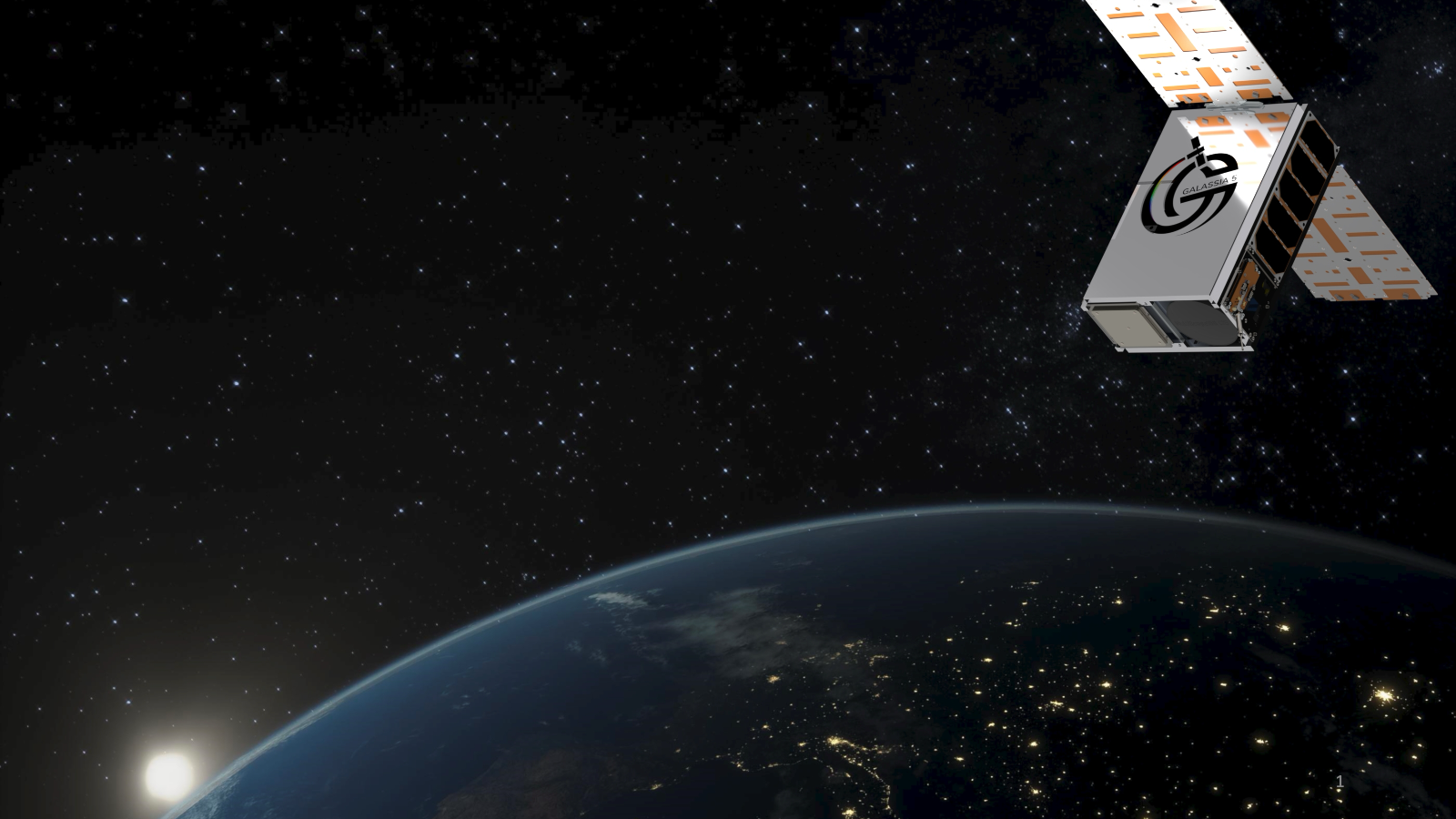
Galassia-5 is a 6U CubeSat built by engineering students at NUS targeted at a technology demonstration mission. It is set to launch in Q3 2027. The primary payload will be an AI-enabled imaging system and KU band radio for data transmission to ground station. However, the existing vendor-provided ground station antenna gimbal system does not meet the mission specifications.
Why?
- Insufficient torque-speed performance: The stepper motors exhibit strong low-speed torque but experience significant torque roll-off at higher step rates due to winding inductance limits. At the angular velocities required to track Galassia-5 CubeSat during its visibility window — particularly during high-elevation, high-angular-rate passes — the steppers operate in a regime where available torque falls below what's needed to maintain tracking, resulting in slew rate lag.
- Poor mechanical efficiency: The structural layout requires substantial counterweighting to balance the 10 kg satellite dish, adding dead mass that increases the rotational inertia the drive system must overcome, and constrains the system's overall mobility and mounting flexibility.
- Inadequate weather protection: The electronics enclosure lacks an adequate ingress protection (IP) rating, precluding rooftop mounting, which is a stated operational requirement.
How?
- Stepper motor replacement: Replace the stepper motors with AC motors, which maintain higher torque at the elevated rotational speeds required for satellite tracking, avoiding the torque roll-off characteristic of steppers at high step rates.
- Mechanical redesign: Redesign the support structure to reduce dead mass, lowering the inertial load on the drive system.
- Weatherproofing: Design the enclosure for environmental sealing from the outset, targeting an IP rating suitable for uncovered rooftop deployment.
What?
I redesigned the gimbal system with two rotational degrees of freedom (azimuth and elevation), incorporating:
- AC motors paried with rotary encoders that applies corrective torque in real time for precise tracking. A high-ratio gearbox is also implemented to reduce RPM for torque and provide mechanical holding torque.
- A structural layout that positions the 10kg dish (the system's dominant mass) closer to the gimbal's rotational center, minimizing the moment arm and thereby the torque required to actuate and hold position. This reduces or eliminates the need for counterweighting, cutting dead mass and total system inertia.
- A weatherproof enclosure with appropriate sealing and ventilation for rooftop deployment, integrated into the system enclosure design from the initial CAD models.